An unfamiliar format
People can't picture a floating billboard until they see one. Text alone doesn't sell it.
Outdoor advertising · Boat billboards · Miami Beach
AdVoyage puts brands on boats that cruise along Miami Beach, in front of millions of people lying on the sand with nothing else to look at. We replaced a free starter site with a landing page that sells the idea in one scroll: designed in Figma, then built in Framer with a looping hero of the boat on the water.
The challenge
Most marketing managers have never bought a boat billboard. They know highway billboards, social ads and influencers. AdVoyage had to explain a new format, prove it works and get a quote request, all on one page.
The first site was a free build by a friend. It had the idea but not the polish a brand manager expects before spending real budget. The founder's one firm request: the boat itself, with an ad on it, has to be the first thing people see.
People can't picture a floating billboard until they see one. Text alone doesn't sell it.
A young company with no long client list. The numbers about Miami Beach had to do the convincing.
Clubs, retail brands, event promoters and real estate all buy differently, and each needed to see itself on the page.
How we worked
Design first, build second. The full page was approved in Figma before a single Framer frame was made, so the build had no surprises.
Discovery
We reviewed the old site and the founder's references, and listed the questions a brand manager asks before booking a new ad format.
Hero
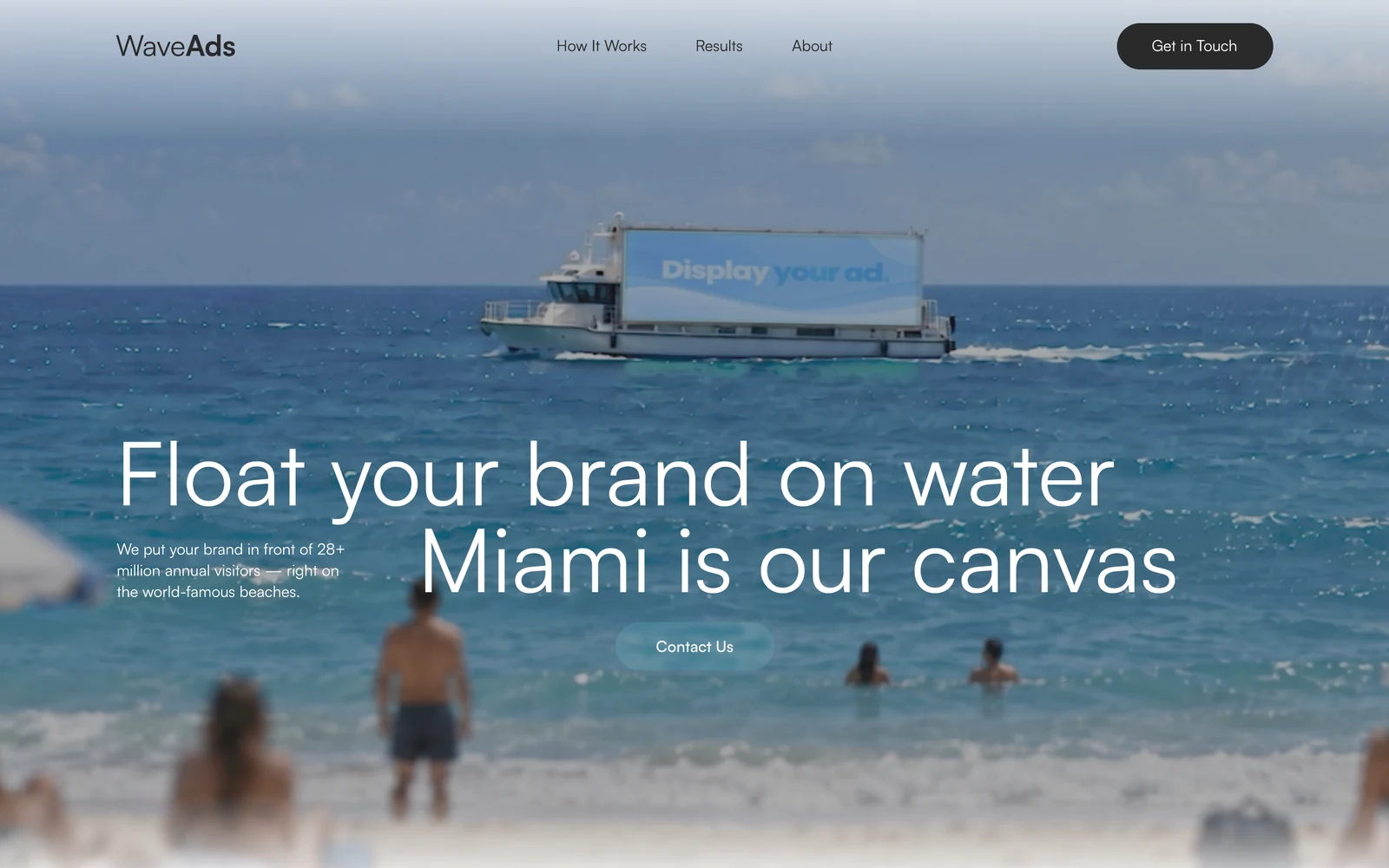
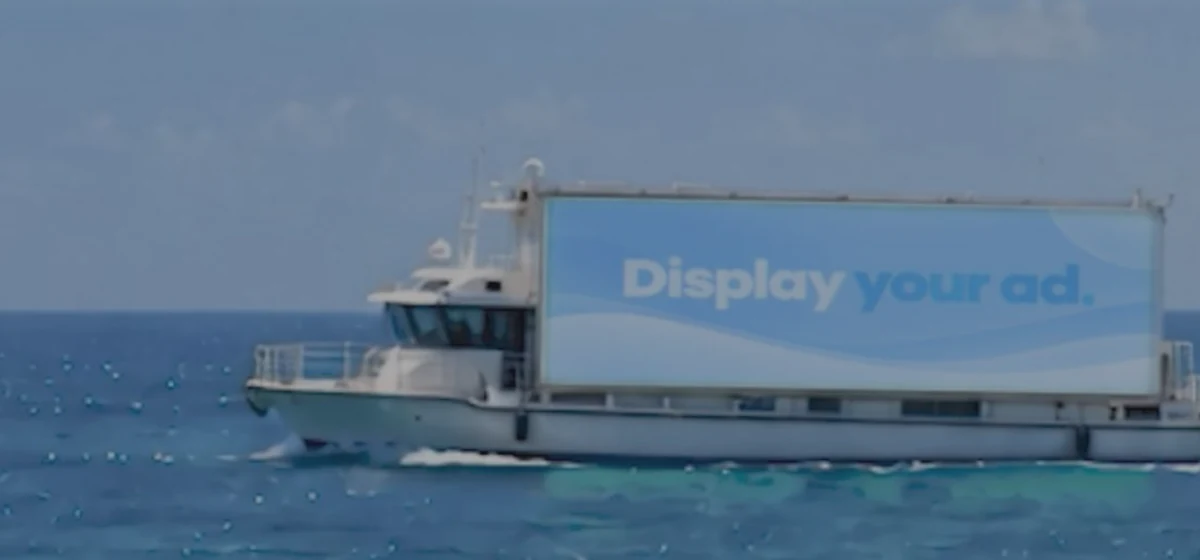
A generated scene of a AdVoyage boat sailing past the beach with "Display your ad" on its side, turned into a looping video for the hero.
Design
Thin lines, numbered columns and lots of white space, so the photos and numbers carry the page. Every section designed in Figma.
Build
Built in Framer from the approved design, with smooth scroll reveals and a working form, so the founder can update copy himself.
At a glance
The idea
The hero boat carries a placeholder ad that says "Display your ad." It does one job: lets a brand manager picture their logo sailing past South Beach. Once they can see it, the format stops being strange and starts being a campaign. Right after, the numbers explain why it works: people on the sand look at the boat for up to a minute, with no other ad in sight.
Why a boat beats a billboard
Proof
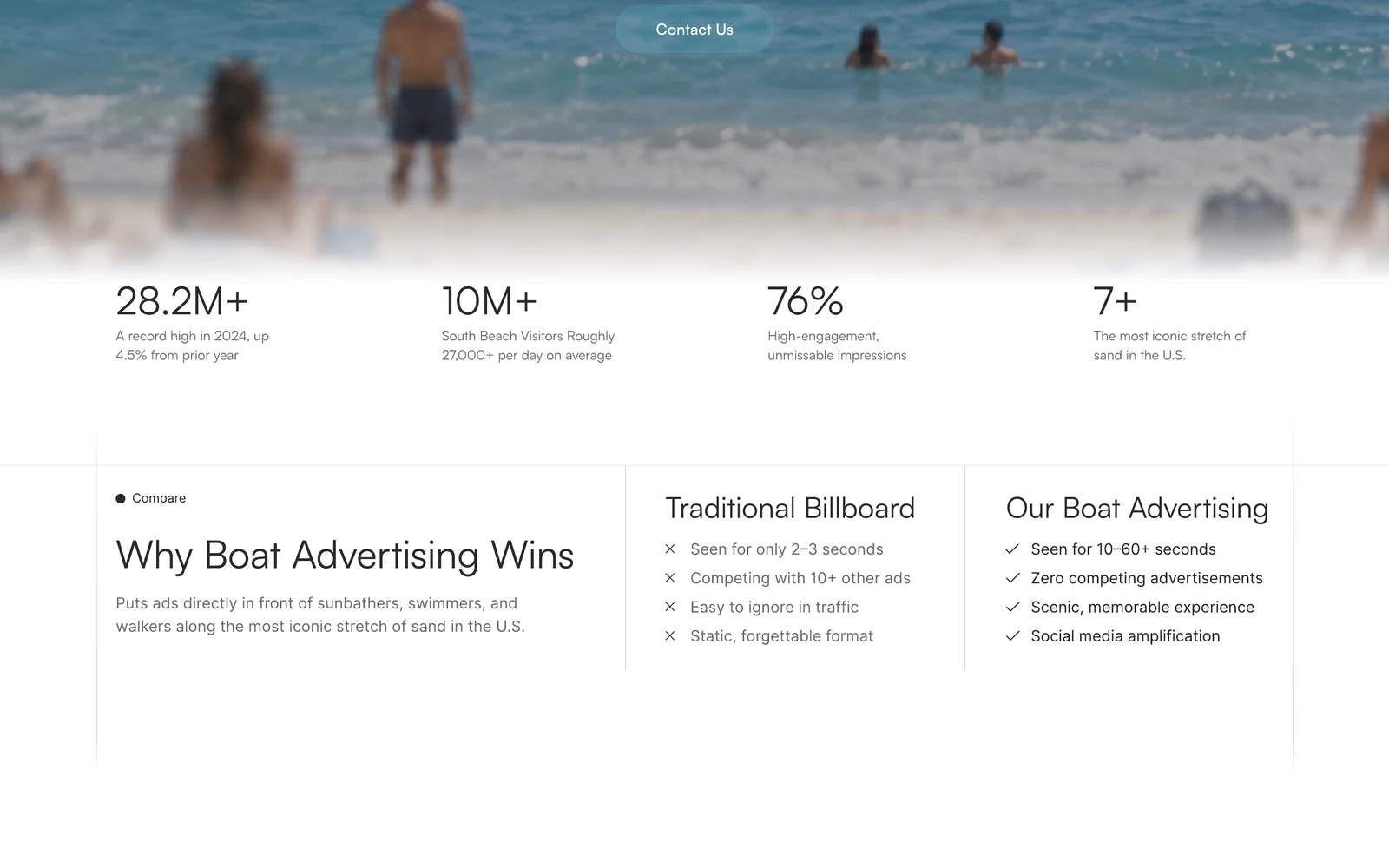
Four big numbers sit right under the hero: 28.2M visitors, 10M on South Beach, 76% engagement, 7+ miles of sand. Then a plain side-by-side shows why a boat beats a road billboard.
Audience
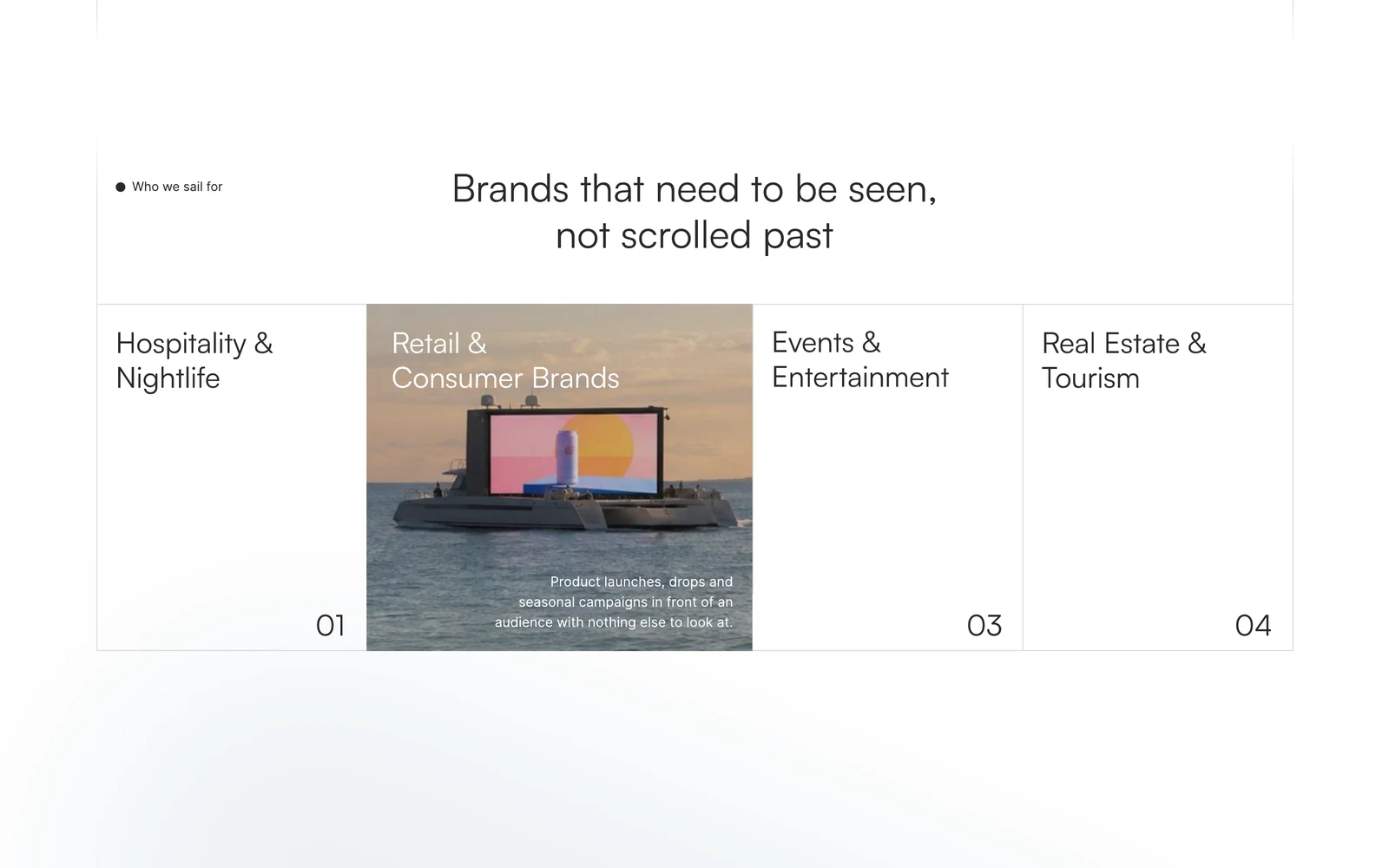
Four numbered columns for hospitality, retail, events and real estate. Hover one and it opens with a photo and a line on how that kind of brand uses the boats.
Advantage
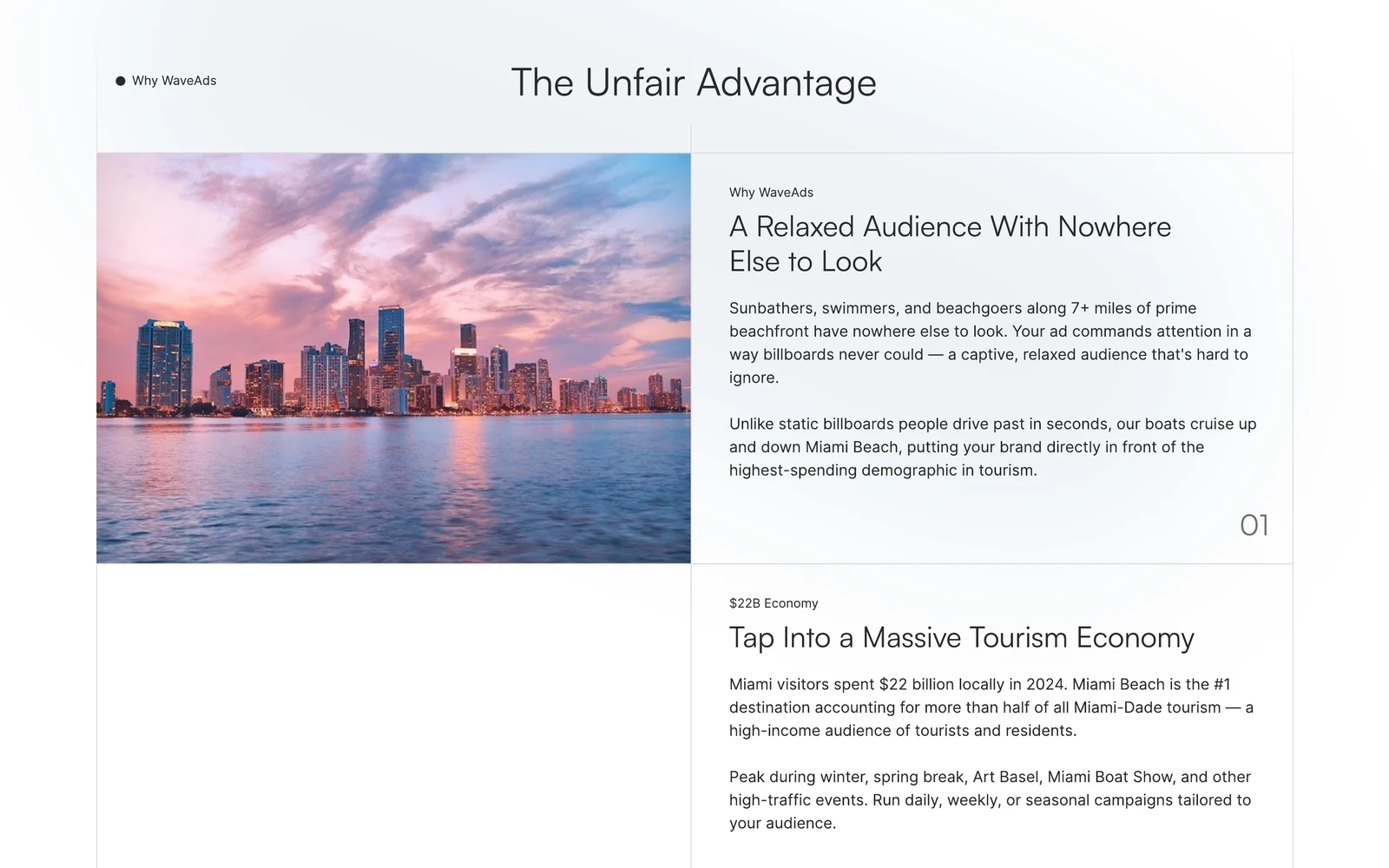
A relaxed audience with nowhere else to look, a $22B tourism economy and free reach when people photograph the boat. Numbered cards next to the city skyline at sunset.
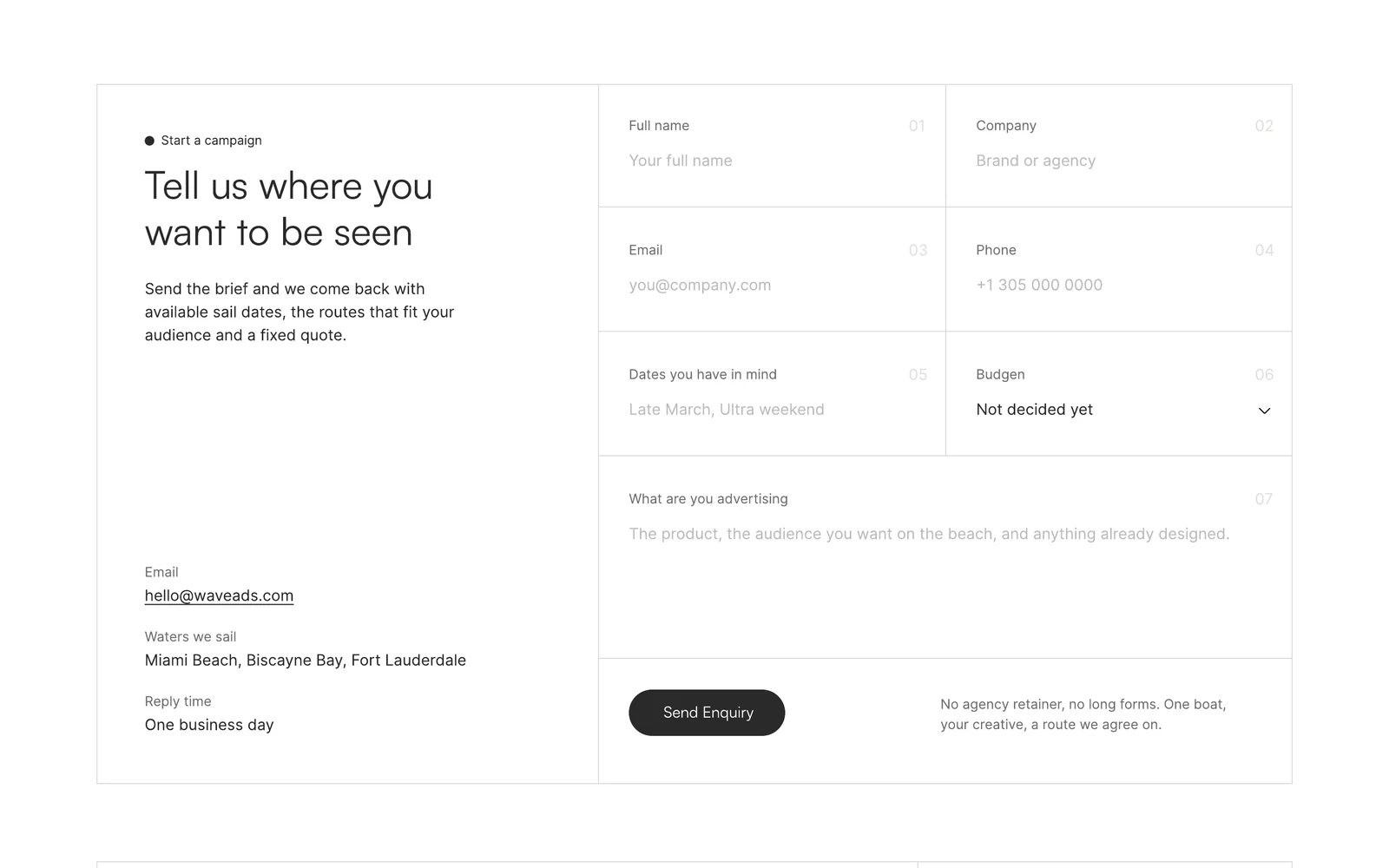
Contact
Seven numbered fields ask what a quote really needs: company, dates, budget and what you're advertising. Next to it, the email, the waters they sail and a promise of a reply in one business day.
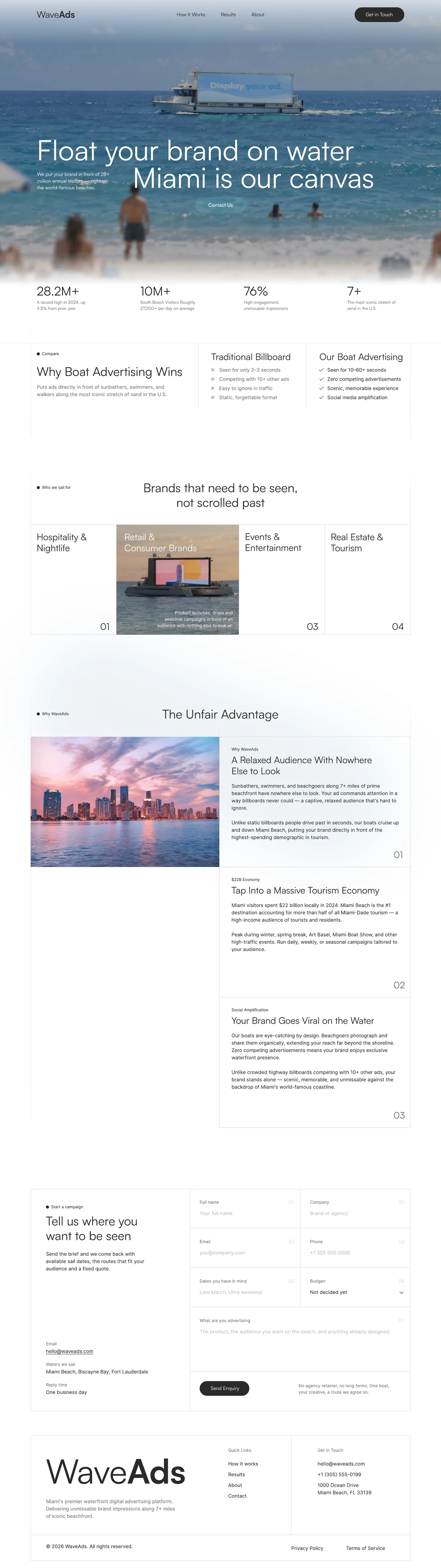
The whole page
Hero, numbers, comparison, audiences, advantages and the form. Each section answers the next question a buyer has, so by the end the only step left is sending the brief.
Key decisions
A stock beach photo and a slogan.
The boat itself, ad on its side, sailing past the beach in a looping video.
Adjectives like "unforgettable" and "unique".
Visitor numbers up front and a direct comparison with road billboards.
"Any brand that wants attention."
Four named audiences, each with its own column and use case.
Name, email and an empty message box.
A short brief with dates and budget, so the first reply can be a real quote.
The result
Your project next